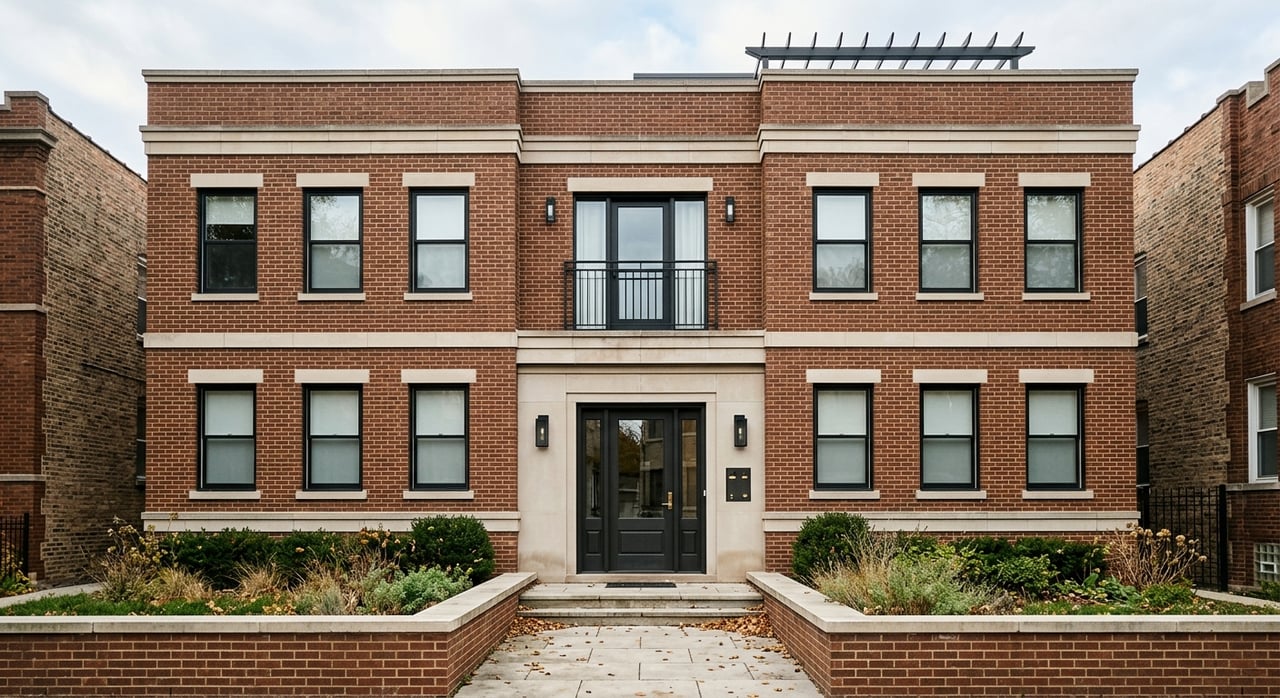
Thinking about buying a two-flat, three-flat, or four-flat in Logan Square? You are not alone. For many Chicago buyers, this kind of property offers a rare mix of homeownership, rental income, and long-term flexibility, but it also comes with more moving parts than a standard condo or single-family purchase. In this guide, you will learn what makes Logan Square such a strong fit for 2 to 4 unit buyers, what to watch for in older buildings, and how to evaluate the numbers with more confidence. Let’s dive in.
Why Logan Square Fits 2-4 Unit Buyers
Logan Square stands out because its housing stock naturally supports small multifamily ownership. According to CMAP neighborhood data, 44.4% of housing units in Logan Square are in 2-unit or 3- to 4-unit buildings, compared with 28.1% citywide. That makes the neighborhood one of the more relevant places in Chicago to search if you want a classic owner-occupant or small investment property.
The area also has a strong renter base. CMAP reports that 62.3% of occupied units are renter-occupied, which matters when you are planning to live in one unit and rent the others, or when you want to hold a building with future leasing potential.
Transit access supports demand too. CMAP shows that 23.2% of residents commute by transit and 21.4% of households have no vehicle. In practical terms, that means location near transit, walkability, and parking setup can all affect how attractive a building feels to future tenants and owner-occupants.
Logan Square Building Types
Classic Chicago two-flats and three-flats
A large share of Logan Square's small multifamily stock reflects classic Chicago building patterns. The Chicago Architecture Center notes that two-flats are often two-story buildings with one apartment per floor, commonly finished in brick or greystone and often designed from the start as wealth-building properties with rental income in mind.
Three-flats are also common, and some four-flats are variations of those same designs. For buyers, that usually means familiar layouts, practical unit counts, and a property type that has worked for owner-occupants in Chicago for generations.
What vintage housing means for you
Logan Square is not a neighborhood defined by brand-new housing stock. CMAP reports that 60.2% of housing was built before 1940, with a median year built of 1932. That matters because many 2 to 4 unit properties here are older buildings with character, but also with age-related maintenance considerations.
An updated building may still have an older structure with renovated kitchens, baths, or systems. A more vintage property may have attractive original details, but you will want to look closely at the building's core components and how recently major work was completed.
Historic context matters
Some parts of the neighborhood carry formal architectural recognition. The Logan Square Boulevards Historic District is listed on the National Register of Historic Places, which reflects the area's historic built environment.
That does not automatically tell you how a specific building was renovated or maintained, but it is a reminder that preservation sensitivity can matter in parts of Logan Square. When you are evaluating exterior changes, additions, or major renovations, details and documentation are important.
Rentability Factors to Review
If you are buying a 2 to 4 unit property, rentability is part of the equation even if you plan to live there. Logan Square's renter share, transit use, and unit mix all support demand, but not every building performs the same way.
CMAP reports that 2-bedroom units make up 39.6% of housing in Logan Square and 3-bedroom units make up 24.4%. That aligns well with the kinds of floor plans often found in two-flats and three-flats, so usable bedroom count can have a big impact on leasing appeal.
Current rent benchmarks also show why unit layout matters. Zumper's Logan Square rent data reported a median rent of $2,350 in April 2026, with average rents of about $2,650 for 2-bedroom units and $2,995 for 3-bedroom units. Those numbers are useful for context, but they should not replace property-specific analysis.
Features that can influence rental appeal
As you compare buildings, focus on practical details such as:
- Separate entrances
- True bedroom count and layout
- In-unit laundry
- Stable heating and cooling
- Sound separation between units
- Basement or dedicated storage
- Off-street parking, if available
In a neighborhood where many households are car-light, parking may not be the top factor for every renter, but it can still add flexibility and value. Transit access and walkability can matter just as much.
Financing Changes the Strategy
How you plan to use the property can significantly affect your financing options. If you are buying as an owner-occupant and living in one unit, financing may be more flexible than if you are purchasing strictly as an investment property.
According to Freddie Mac's guide to 2- to 4-unit mortgages, primary-residence programs may allow rental income from the other units to be added to borrower income. Freddie Mac also notes that its Home Possible program for fixed-rate 2 to 4 unit homes allows up to 95% maximum loan-to-value, with certain borrower contribution and education requirements.
That is a major difference from financing a 2 to 4 unit building strictly as an investment property. Freddie Mac's maximum LTV requirements list a 75% max LTV for 2- to 4-unit investment property, which generally means a much larger down payment before closing costs and reserves.
Why owner-occupants often have an edge
For many buyers, the owner-occupant route creates a more achievable entry point. If you can live in one unit and offset part of your housing cost with rent from the others, the purchase may become more workable than buying a comparable single-family or condo property in the same area.
That said, the building still needs to make sense financially. Better loan terms do not fix an overestimated rent roll, underestimated repairs, or a building with deferred maintenance.
Underwrite the Property Conservatively
A 2 to 4 unit property is more than a purchase price and mortgage payment. To understand whether a building really works for your budget, you need to look at the full cost structure.
The Consumer Financial Protection Bureau notes that ongoing homeownership costs can include mortgage insurance, property taxes, homeowner's insurance, flood insurance, HOA fees, maintenance, and utilities. The CFPB also says that closing costs typically run about 2% to 5% of the purchase price.
In Logan Square, where prices can be substantial, those line items matter. Redfin reported a median sale price of $557,500 for Logan Square homes in February 2026, with 68 median days on market, which points to a market where buyers should prepare carefully and move with a plan.
Budget items buyers often forget
When you review a building, make room in your numbers for:
- Property taxes
- Insurance
- Utilities not paid by tenants
- Routine maintenance
- Repair reserves
- Vacancy or turnover periods
- Closing costs
A deal can look attractive at first glance and still feel tight in real life if these costs are too optimistic. Conservative underwriting usually gives you a clearer picture and more room to adapt after closing.
Inspect the Building Beyond Finishes
Beautiful kitchens and fresh paint are nice, but they should never distract you from the bones of the property. Because so much of Logan Square's housing predates 1940, small multifamily buyers should pay close attention to the physical condition of the building itself.
For many vintage properties, the most important inspection items include:
- Roof condition
- Masonry and tuckpointing
- Plumbing updates
- Electrical service and panel capacity
- Basement moisture or drainage issues
- Porch and rear stair condition
These are often the line items that shape the true ownership experience. Cosmetic updates are visible on day one, but structural and system issues are usually where cost and stress show up later.
Verify Unit Count and Property History
In Logan Square, legal configuration matters. A HUD Cityscape analysis found that Logan Square accounted for 9.8% of Chicago's two-to-four-unit parcels lost to single-family homes from 2013 to 2019.
That statistic highlights an important due diligence point: not every property marketed as a multifamily opportunity will have the same legal history, paperwork, or future flexibility. Buyers should verify current unit count, review available permits, and understand whether any deconversion, duplex-down, or duplex-up work was done legally and documented clearly.
This is especially important if your purchase strategy depends on keeping multiple units in place. The listing description is only the starting point. Your due diligence should confirm how the property is configured today and whether the documentation supports that setup.
How to Think About the Right Purchase
The best Logan Square 2 to 4 unit purchases usually balance three goals at once: lifestyle, rental strategy, and long-term building quality. You may be looking for a place to live now with income support from other units. Or you may be focused on flexibility, future appreciation, and a building that can adapt with your plans.
The neighborhood has many of the ingredients buyers want: a large share of small multifamily stock, strong renter presence, transit connectivity, and classic Chicago architecture. But success often comes down to buying the right layout, understanding the true condition of the building, and running the numbers conservatively from the start.
If you are weighing a two-flat, three-flat, or four-flat in Logan Square, working with a team that understands Chicago multifamily housing, vintage building stock, and neighborhood-level buying strategy can make the process much clearer. Connect with K + D Homes for thoughtful guidance as you compare options and plan your next move.
FAQs
What makes Logan Square a strong area for 2-4 unit properties?
- Logan Square has an unusually large share of housing in 2-unit and 3- to 4-unit buildings, along with a renter-heavy population and strong transit usage, which supports both owner-occupant and rental strategies.
What should you inspect first in a Logan Square vintage multifamily building?
- Focus on major building systems and structure, including the roof, masonry, tuckpointing, plumbing, electrical, basement moisture, and porch or rear stair condition.
How does owner-occupant financing work for a 2-4 unit property?
- Freddie Mac states that eligible primary-residence programs may allow rental income from other units to help with qualification, and certain programs offer higher maximum loan-to-value limits than investment-property financing.
What rent benchmarks should you review for Logan Square multifamily units?
- Zumper reported an April 2026 Logan Square median rent of $2,350, with average rents around $2,650 for 2-bedroom units and $2,995 for 3-bedroom units, though you should still analyze each property based on its exact layout and condition.
Why is legal unit count important when buying a Logan Square 2-4 unit building?
- Logan Square has seen notable conversion pressure from small multifamily buildings to single-family homes, so buyers should confirm permits, documented renovations, and the property's legal unit configuration before closing.