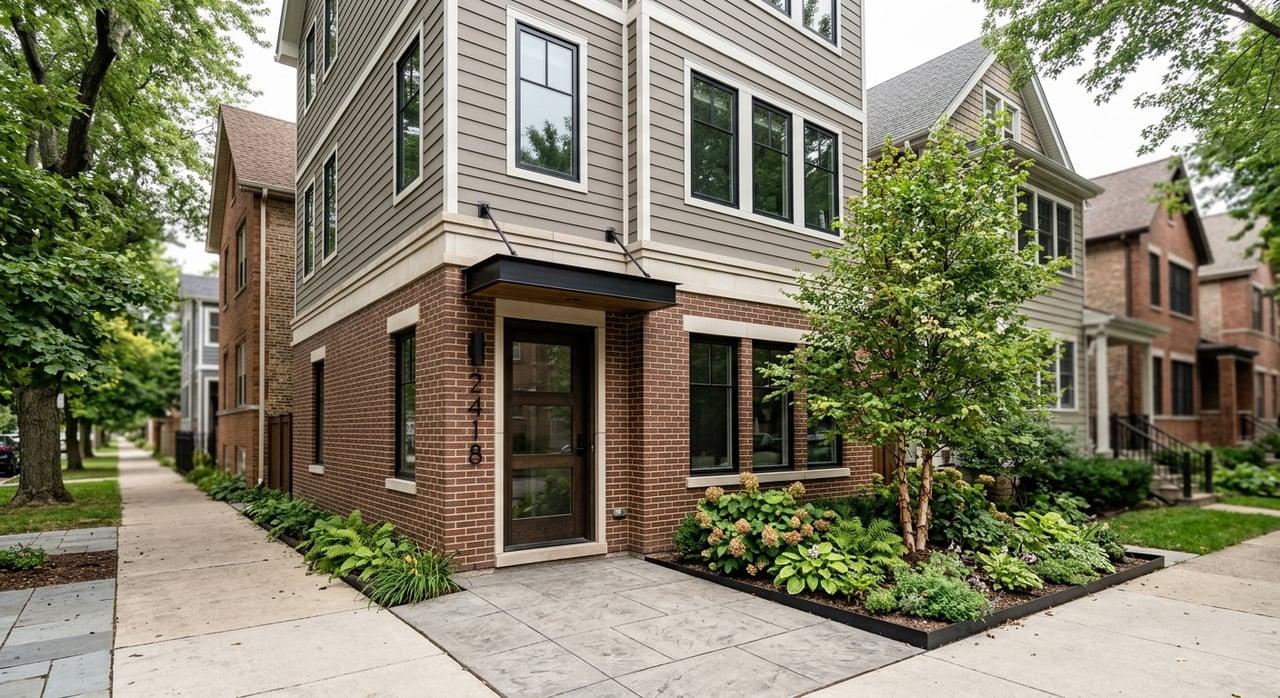
If you have started looking in Lincoln Park, you have probably already noticed something important: the neighborhood does not live the same from block to block. One address may put you steps from the lakefront trail, while another makes daily errands and train access much easier. If you want to choose a home that fits how you actually live, it helps to think smaller than the neighborhood name. Let’s dive in.
Why Lincoln Park Feels So Different
Lincoln Park is a dense, mixed-use community area with an estimated 67,987 residents and 33,772 households, according to CMAP’s June 2026 snapshot. It also has a varied physical makeup, with commercial parcels, open space, transportation uses, and housing from different eras all packed into the same neighborhood.
That mix is a big reason one block can feel quiet and residential while another feels busy and highly connected. Lincoln Park also covers a broad area framed around Diversey to the north, North Avenue to the south, Lake Michigan to the east, and the Kennedy Expressway to the west, with several distinct commercial districts inside those boundaries.
Start With Your Daily Priorities
Before you compare listings, it helps to decide what matters most in your day-to-day routine. In Lincoln Park, small location differences often shape your experience more than square footage or finishes.
Ask yourself which of these matters most:
- Easy access to parks, beaches, and the Lakefront Trail
- Walkability to shops, dining, and neighborhood services
- Quick CTA access for commuting or late-night travel
- Better parking flexibility and driving convenience
- A more buffered residential feel off the busiest streets
Once you know your top priorities, it becomes much easier to narrow down the right part of Lincoln Park.
East-Side Blocks for Park Access
If you want everyday access to open space, the east side of Lincoln Park often stands out first. These blocks sit closest to Lincoln Park itself, the 1,188.62-acre park that includes Lincoln Park Zoo, the Lincoln Park Conservatory, Theatre on the Lake, the Chicago History Museum, the Peggy Notebaert Nature Museum, the Alfred Caldwell Lily Pool, North Pond Nature Sanctuary, North Avenue Beach, and Oak Street Beach.
For many buyers, this is the biggest lifestyle draw in the neighborhood. Lincoln Park Zoo is free and open every day of the year, and the conservatory also offers free admission, which adds to the sense that the park can be part of your regular routine rather than just an occasional destination.
The Lakefront Trail is another major advantage. The local stretch runs through Lincoln Park with separate bike and pedestrian routes, giving you strong options for walking, running, or cycling.
What the East Side Offers
These blocks usually work well if you want:
- Fast access to green space
- A short path to beaches and lakefront routes
- Easy use of the zoo, conservatory, and other park amenities
- A daily routine centered around outdoor activity
East-Side Tradeoffs to Know
The same amenities that make these blocks appealing also draw visitors and seasonal activity. That can mean a more active environment near the park edge, especially around major destinations and warm-weather recreation.
This does not make east-side blocks better or worse. It simply means they often fit buyers who want the park as part of daily life and are comfortable with that added energy nearby.
Corridor Blocks for Walkability
If you picture Lincoln Park as a place where you can walk to coffee, dinner, shops, and transit, the retail and transit corridors may be your best match. The most active clusters center around Clark, Halsted, Armitage, Diversey, and Lincoln.
The Lincoln Park Chamber describes Clark Street and Diversey as a concentrated retail corridor and notes that the Clark and Diversey area is one of the city’s most trafficked pedestrian intersections. It also highlights the Armitage-Halsted-Webster area as a historic and architecturally significant retail district, with the Lincoln-Halsted and Lakefront-Clark hubs adding more commercial variety.
Best Fit for Everyday Convenience
These blocks often appeal to buyers who want to:
- Walk to shops and dining
- Rely less on a car for errands
- Stay close to buses and train access
- Live in the middle of neighborhood activity
If your ideal setup is stepping out your front door and having most daily needs within reach, these locations can be very compelling.
Corridor Tradeoffs to Consider
There is usually a tradeoff for that convenience. Main corridor blocks tend to have more foot traffic, bus activity, deliveries, and a more animated street presence than interior residential streets.
That is why two homes that are only a few blocks apart can feel so different. Living on the corridor itself is often a very different experience from living one or two streets away.
West-Edge Blocks for Retail and Parking
The west side of Lincoln Park, especially near North-Clybourn, has a different rhythm. The chamber identifies North-Clybourn as one of the neighborhood’s major commercial districts, and it notes that this area is known for national home-goods and furniture brands, with onsite parking at many businesses and at the NEWCITY complex.
For buyers who still drive often, this can be a meaningful advantage. These blocks can feel more convenience-driven, especially if you value easier shopping access and less dependence on the lakefront side of the neighborhood.
Why North-Clybourn Stands Out
This pocket may be a strong fit if you value:
- Shopping convenience
- More parking flexibility at businesses
- Close access to a major transit node
- A mixed-use setting with practical daily access
The North/Clybourn CTA station also adds strong connectivity. It is a Red Line subway stop with indoor bike parking and bus connections to routes 8, N9, and 72.
How the West Edge Feels Different
Compared with east-side blocks, the west edge is usually less park-centric and more commercially oriented. For some buyers, that is exactly the point. For others, it may feel less like the version of Lincoln Park they had in mind.
Interior Streets for Balance
Some of the best block choices in Lincoln Park are not the obvious ones. Interior residential side streets, especially those one or two streets off the main corridors, often offer a useful middle ground.
Because Lincoln Park combines busy retail districts, major transit nodes, and older housing stock, even a short shift away from Clark, Armitage, Diversey, or Clybourn can noticeably reduce street activity. At the same time, you can still keep much of the walkability and location value that drew you to the neighborhood in the first place.
Why Buyers Often Prefer This Compromise
Interior blocks may be worth extra attention if you want:
- Access to neighborhood amenities without living directly on a corridor
- A more residential street feel
- Short walks to retail and transit with less street activity
- A practical blend of convenience and separation
For many buyers, this is where long-term fit becomes clearer.
Transit Can Change Your Experience
In Lincoln Park, CTA access is one of the biggest block-level differentiators. A home that looks similar on paper can feel much more convenient, or much less, based on which station or bus routes are nearby.
Fullerton is a Red, Brown, and Purple Line station. Armitage and Diversey are Brown and Purple Line stations, while Clark/Division and North/Clybourn are Red Line stops.
Why Red Line Proximity Matters
The Red Line offers 24-hour service citywide. Because of that, blocks near Fullerton, Clark/Division, and North/Clybourn usually have the strongest all-hours transit profile.
If you keep irregular hours, commute across the city, or simply want stronger late-night transit access, that can be a major factor. Brown and Purple Line access is still very strong, but the feel and utility may differ depending on your routine.
Bus and Bike Access Matter Too
Buses help explain why certain intersections feel like neighborhood anchors. Route 22 Clark serves stops at Clark/Diversey and Clark/Division, while Route 72 North extends to the lakefront and beaches in warmer months, reinforcing seasonal access on the east side.
Bike access can also be a deciding factor. The neighborhood includes dozens of bike lanes, the Lakefront Trail, and bike parking at stations such as Armitage and North/Clybourn. For some buyers, being closer to a bike route or station bike parking may matter just as much as being closest to the lake.
How to Tour Lincoln Park Smarter
When you tour Lincoln Park, it helps to compare blocks, not just homes. The more specific your observations, the easier it is to identify the right fit.
Use this quick checklist as you tour:
- Visit the same block at weekday rush hour and weekend midday if it is near Clark/Diversey, Armitage-Halsted, Lincoln-Halsted, or Clybourn
- Measure the real walk from the front door to the nearest CTA station, bus stop, and lakefront access point
- On east-side blocks, compare which park amenities are actually closest, such as the zoo, conservatory, beach, or a specific trail segment
- On the west edge, pay closer attention to business parking and the surrounding commercial pattern
- If you want a quieter setting, focus on blocks buffered from major corridors and transit nodes rather than directly on them
This kind of touring approach usually gives you a much clearer picture than relying on a listing map alone.
The Best Block Depends on You
Lincoln Park is best understood as a set of small location trades rather than one uniform neighborhood. East-side blocks usually optimize park and lakefront access, central corridor blocks often optimize walkability and transit, and west-edge blocks tend to optimize retail and parking convenience.
The right choice depends on how you want your days to work once the move is over. If you want help comparing specific pockets, building a smarter tour plan, or finding the right Lincoln Park fit for your lifestyle, connect with KD Homes.
FAQs
What makes one Lincoln Park block feel different from another?
- Lincoln Park has a dense mix of residential streets, commercial corridors, transit nodes, and park access, so even a short distance can change noise levels, walkability, and daily convenience.
Which Lincoln Park blocks are best for park and lakefront access?
- East-side blocks closest to Lincoln Park and Lake Michigan usually offer the strongest access to the park, beaches, the Lakefront Trail, the zoo, and the conservatory.
Which Lincoln Park areas are most walkable for shops and dining?
- Blocks around Clark, Halsted, Armitage, Diversey, and Lincoln tend to offer the most direct walkability to retail, dining, and neighborhood services.
Which Lincoln Park blocks have the strongest transit access?
- Blocks near Fullerton, Clark/Division, and North/Clybourn usually have the strongest all-hours transit profile because those stations connect to the Red Line, which runs 24 hours citywide.
Where should you look in Lincoln Park for a quieter residential feel?
- Interior side streets one or two blocks off major corridors often provide a better balance if you want neighborhood access with less foot traffic and street activity.
Which Lincoln Park area may work best if you drive often?
- The west-edge and North-Clybourn area may be a better fit if shopping convenience, onsite business parking, and access to a major transit node are high on your list.