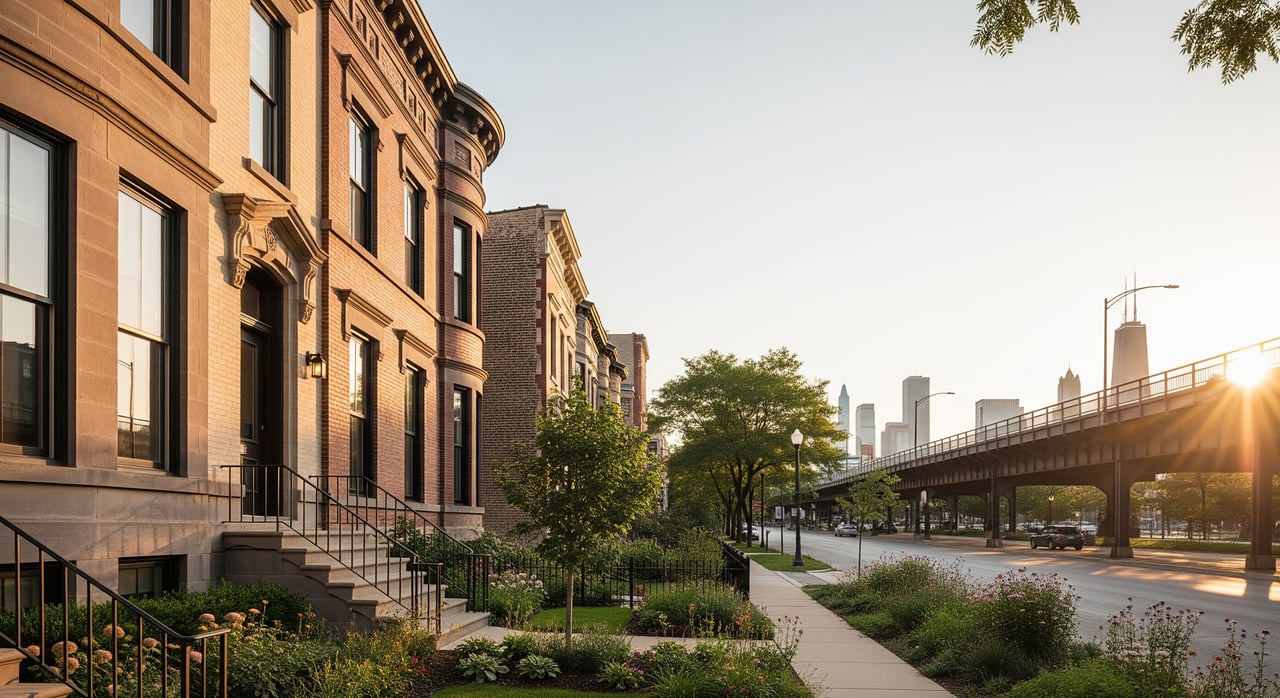
Does being steps from The 606 actually change what your Logan Square home is worth? If you live, buy, or sell near the Bloomingdale Trail, you feel the lifestyle benefits and the buzz. You also want clear, local guidance on how proximity affects price, demand, and day-to-day living. In this guide, you’ll learn what adds value, what can detract, and how to price and shop smart using actionable distance bands and comps. Let’s dive in.
The 606 at a glance
The Bloomingdale Trail, branded The 606, opened in 2015 as a 2.7-mile elevated park and multi-use path that runs through Chicago’s northwest neighborhoods, including parts of Logan Square. It repurposed an old rail embankment into a corridor for walking, running, and biking with multiple access points. The trail serves as both a recreation space and a practical connector between parks and streets. City agencies and nonprofit partners handle management and maintenance.
Logan Square’s housing stock includes single-family homes, greystones, multi-units, and condos, with commercial energy along corridors like Milwaukee Avenue. Since The 606 opened, the neighborhood has seen notable investment and price appreciation alongside broader city trends.
How proximity shapes value
Amenity and lifestyle value
When you live near The 606, you gain easy, car-free access to a scenic elevated path. For many buyers, that convenience is a premium. Access to a safe, well-used trail you can enter within a few blocks often boosts a home’s appeal. Some properties also benefit from pleasant outlooks toward landscaped segments of the trail.
Visibility and buyer demand
Listings that highlight “near The 606” tend to draw buyers who prioritize lifestyle amenities. That concentrated attention can mean more showings and stronger interest. In many urban markets, homes near visible amenities see faster days on market, although the effect varies by block and building type.
Development pressure and change
After 2015, areas close to trail access points saw increased developer interest for infill and higher-density projects. That activity can support nearby values and refresh housing options. Outcomes depend on zoning, site availability, and timing within the market cycle.
Potential tradeoffs to weigh
Proximity is not all upside. Homes next to access ramps or high-traffic segments may experience more passersby, daytime parking competition, and occasional noise. Some buyers prefer added privacy. Maintenance perceptions, lighting, and event activity can also influence how buyers evaluate a block.
Distance and micro-location matter
The effect is not uniform. A single-family home that backs directly onto the trail can perform differently than a condo three blocks away. Orientation, floor height, screening trees, fencing, and whether a yard faces the trail all shape value. Small micro-location features can tip a property from premium to neutral, or even to a slight discount if privacy is a priority for your target buyer.
What the evidence shows
Urban economics research on linear parks and rails-to-trails projects generally finds an average positive impact on nearby property values, but magnitude varies by distance, housing type, and neighborhood context. For The 606 specifically, formal studies exist but are fewer than for larger projects like the High Line or Atlanta BeltLine. Local reporting and municipal datasets document rising prices and development interest along the corridor, while noting other contributing factors such as transit access and broader market cycles.
To translate that into decisions, use local data. Parcel-level Cook County sales records and MLS comps can isolate a practical “606 effect” for your property type and block. Methods like hedonic pricing and difference-in-differences help analysts estimate a premium while controlling for features such as beds, baths, and square footage. Real-world pricing for a specific property still comes down to recent comps, accurate distance bands, and marketability metrics like days on market and sale-to-list ratio.
Pricing near The 606: a comp strategy
Use a structured approach so you price with confidence and avoid overgeneralizing.
- Define distance bands for comps: adjacent (touching or backing to the trail), very near (within about 0.1 mile or 500 feet), near (up to 0.25 mile), and control (0.5 to 1 mile). Compare prices across bands.
- Control for property attributes: beds, baths, square footage, lot size, age, condition, and parking. For condos, also control for floor level, exposure, and whether the unit faces the trail.
- Compare pre-2015 and post-2015 trends to understand the baseline for your micro-area.
- Track marketability: include days on market and sale-to-list ratio. In-demand segments may sell faster even if the price premium is modest.
- Adjust for orientation: a rear yard that fronts the trail with good screening can differ from a front-facing unit several houses off an access ramp.
Seller playbook near The 606
Showcase the right details and address concerns upfront to widen your buyer pool.
- Lead with facts: mention distance to the nearest access point, number of minutes to reach it by foot, and any trail views.
- Highlight everyday benefits: secure bike storage, mudroom or gear space, and convenient routes to shops and parks.
- Mitigate privacy and noise concerns: call out mature trees, privacy fencing where allowed, upgraded windows, or landscaping that screens outdoor areas.
- Document maintenance context: share what the city or partners handle near your block, such as lighting or snow clearing, if applicable.
- Elevate presentation: high-quality photos, 3D tours, and concise lifestyle copy help buyers visualize how the property pairs with the trail amenity.
Buyer checklist for Logan Square near The 606
Go beyond the map. Test how the location lives at different times.
- Visit at several times of day: weekday commute, weekend midday, and evening. Note foot and bike traffic, lighting, and noise.
- Review local crime statistics at the block level and talk with nearby residents or community groups for context. Avoid assuming the trail causes crime without data.
- Assess parking during busy hours if you rely on street parking. Check local permit zones.
- Study orientation and elevation: a ground-floor condo facing the trail may feel different from a third-floor unit or a single-family home with a screened yard.
- Verify comps that explicitly note trail proximity and similar distance bands.
Upgrades that capture trail value
Strategic improvements can help you realize the amenity premium while protecting privacy.
- Improve outdoor living where it counts: decks, patios, and seating that face attractive landscaping or filtered views.
- Add bike-friendly features: secure storage, wall mounts, and durable flooring in entry zones.
- Enhance privacy: plantings, fences where permitted, and upgraded window treatments for trail-facing rooms.
- Emphasize access: clear, safe pathways from house to sidewalk for quick trail entry.
Legal and municipal checks
Before you write an offer or list, clarify what could affect value or future plans.
- Confirm easements, setbacks, and any proximity rules near public infrastructure.
- Learn who maintains nearby trail elements, including lighting and snow removal, and whether any capital projects are planned.
- For condos or multi-unit buildings, verify insurance and liability provisions related to public access near the property.
Micro-location scenarios to compare
These quick scenarios help you position value during pricing or negotiation.
- Adjacent to an access ramp: higher visibility and activity, which some buyers love for convenience, while others prefer more privacy.
- Upper-floor condo facing the trail: potential for pleasant outlooks and less foot-level noise, often a positive for marketability.
- Single-family with a yard backing to the trail: screening and fence quality matter; well-designed outdoor space can convert proximity into a premium.
- Home two to three blocks away: easy access without being in the thick of it, often a balanced profile for buyers who value both convenience and quiet.
Key takeaways for Logan Square owners and buyers
The 606 is a signature amenity that can lift value, speed up sales, and shape daily routines. The effect is highly local. Distance, orientation, building type, and even tree cover influence whether proximity delivers a premium or introduces tradeoffs you should price in.
If you are selling, present objective proximity details, emphasize lifestyle benefits, and address privacy early. If you are buying, test the block at multiple times, evaluate comps by distance band, and weigh how you will actually use the trail.
Ready to make a data-smart move near The 606 or want a custom pricing analysis by distance band and property type? Connect with the neighborhood experts at K + D Homes for a tailored plan.
FAQs
How does The 606 generally affect Logan Square home prices?
- Linear parks often correlate with higher nearby values, but the impact varies by distance, property type, and micro-location, so use recent local comps to quantify it.
Do homes next to The 606 sell faster in Logan Square?
- Many buyers prioritize lifestyle access, which can shorten days on market, but activity levels near ramps or busy segments may narrow the pool for privacy-focused buyers.
What should I look for when buying near The 606?
- Visit at multiple times, check block-level data, assess parking, and compare trail-facing versus non-trail-facing comps within clear distance bands.
Are there downsides to living very close to The 606?
- Expect more passersby and occasional noise near access points, and plan for privacy landscaping, upgraded windows, or fencing where allowed to offset concerns.
How do I price a Logan Square condo within 0.1 mile of the trail?
- Use recent sales within the same distance band, control for floor level and exposure, and compare against similar units 0.25 to 1 mile away to estimate any premium.