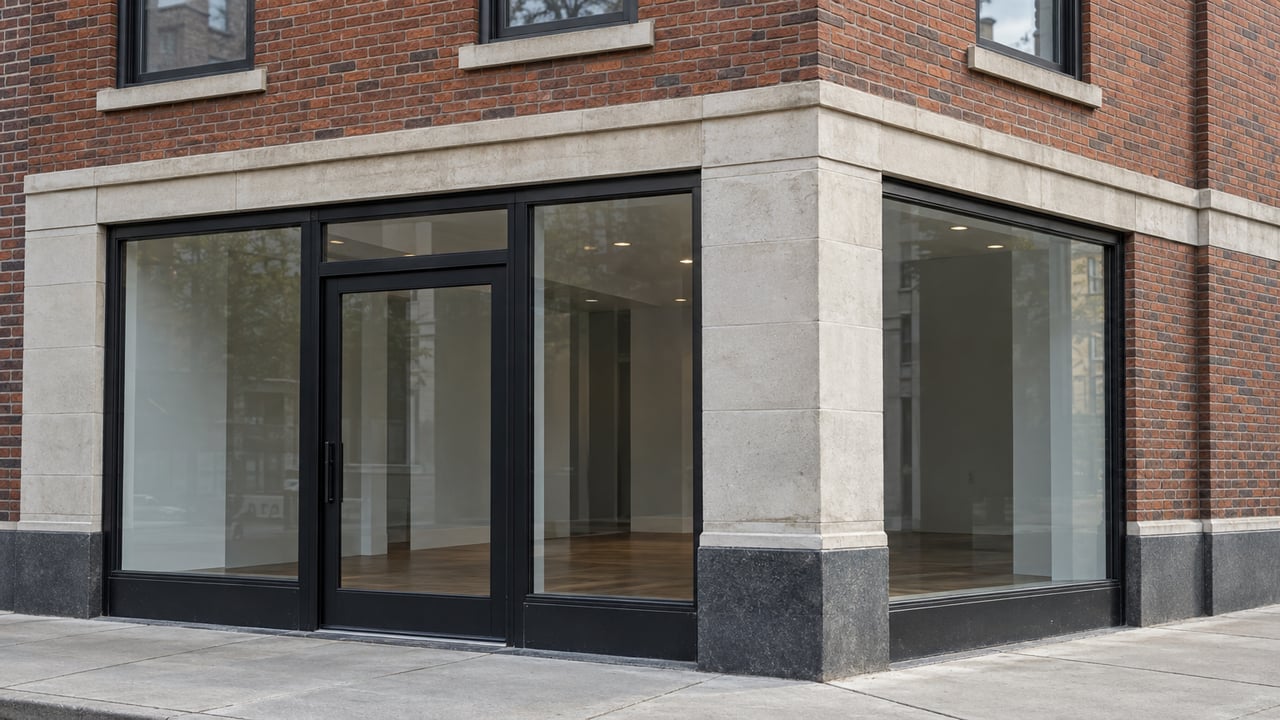
Why would a landlord demolish a building that's still collecting rent?
That's the question hanging over one short stretch of Oak Street in Chicago's Gold Coast this year. A five-story building at 67 E. Oak that housed a custom haberdashery and a tabletop decor shop is coming down for a two-story replacement. Down the block, Razny Jewelers bought the building next to the one it already leases and is demolishing it to build something bigger. Around the corner, the building that holds Prada's flagship went up for sale. And in January, Urban Outfitters walked away from its multilevel space at 1100 N. State entirely.
Read those four facts in a vacuum and they sound like a retail corridor in trouble. Read them against what's actually happening to rent and vacancy on this specific street, and they say the opposite. Anyone comparing Gold Coast to another near-north neighborhood this fall should understand why, because a retail corridor's health is one of the more reliable signals of how a residential block around it will hold value.
What's actually under the fencing
Three properties on Oak Street are mid-transformation right now, and they're not the same story wearing different clothes.
| Address | What was there | What's replacing it | Status as of fall 2026 |
|---|---|---|---|
| 107-109 E. Oak St. | A three-story building Razny Jewelers has leased since 2016, plus the neighboring 107 the company bought in 2024 for a reported $16.4 million | A connected four-story flagship with a dedicated two-story Rolex showroom, a bridal showroom, and a fourth-floor event space | Demolition permit secured for 107; construction was slated to break ground in spring 2026 |
| 67 E. Oak St. | A five-story multi-tenant building that most recently held custom haberdashery Ike Behar and tabletop decor shop The Perfect Setting | A two-story single-tenant flagship rising 36 feet, reportedly for Van Cleef & Arpels, designed by Myefski Architects | Full building permit issued in August 2026, an $8.1 million project |
| 30 E. Oak St. | Prada's 11,000-square-foot flagship, still operating, flanked by Vuori and Arc'teryx | No change in use, just ownership | Listed for sale in June 2026 by owner J. Safra Real Estate, expected to sell near $30 million |
The building at 67 E. Oak has its own layered history. It briefly served as Hubert Humphrey's Chicago campaign headquarters in 1968, the same year a $500,000 renovation gave the Victorian structure a modern glass facade and turned it into the boutique shops and galleries that included Distelheim Galleries. The filing entity behind the current redevelopment, 67 E. Oak Street Partners LLC, is managed by Ellen Distelheim, whose father Dr. Irving Distelheim opened that gallery in the 1960s. The same family has watched this one address move through nearly every phase of Oak Street's transformation into a luxury corridor.
None of this is a first for the block. LOEWE opened a two-floor storefront at 51 E. Oak in a circa-1890s building, and Bottega Veneta built out a two-story space at 41 E. Oak behind a 32-foot glass, brass, and stone facade. The single-brand, multi-level flagship isn't a new idea here. What's new is landlords who already have a paying multi-tenant building choosing to tear it down anyway.
The vacancy number that makes the demolitions make sense
Here's the part that reframes everything: Oak Street is one of the few retail corridors in Chicago not dealing with high vacancy, even as stretches of the nearby Magnificent Mile continue to work through empty storefronts and repositioning. Commercial listings for the strip have put gross asking rents as high as $300 to $400 per square foot, with vacancy running under 5 percent.
That combination, high demand and almost no available space, is exactly the condition that makes demolishing a functioning building rational instead of reckless. A three-story or five-story building split among several tenants earns whatever those individual leases pay. A two-story building built for one flagship brand can be priced at the ceiling of what that corridor supports, with no tenant mix to negotiate around and no vacancy risk from a departing shop next door. When asking rent per square foot climbs high enough, and available land is scarce enough, the math favors building smaller and taller over leasing what's already standing.
Stan Razny, the company's CEO, framed his own project in those terms when the purchase was announced, saying the move "strengthens our presence on Oak Street." That's not language from a retailer hedging against a soft market. It's language from a retailer locking down real estate before someone else does.
A building for sale isn't always a building in trouble
The Prada building's sale fits the same pattern from a different angle. J. Safra Real Estate isn't listing 30 E. Oak because the store is struggling. Prada's lease continues uninterrupted. The sale is an owner testing what a fully-leased, irreplaceable Oak Street address is worth to an investor right now, and the answer several parties are betting on is around $30 million.
It's part of a broader wave of owners doing the same math this year. L3 Capital hired CBRE in April to sell 1000 N. Rush St., a converted bank building now leased to Skims, and is reportedly picking up retail space at the base of the Palmolive Building that includes a Louis Vuitton store. A few blocks south, MetLife is putting $170 million into repurposing the Water Tower Place vertical mall. Money is moving toward this corridor, not away from it.
The residential market nearby is telling a similar story. The Astor Court Estate listed in April 2026 asking $21 million, and it immediately became the priciest active listing in Chicago. A retail strip commanding top-of-market rents and a residential listing commanding the city's highest ask sit inside the same few blocks for the same underlying reason: sustained demand for a small, non-replicable footprint.
What Urban Outfitters leaving actually freed up
The Urban Outfitters exit at 1100 N. State reads the most like a decline story on paper, and it's the clearest example of how misleading that read can be. The chain's lease simply expired after roughly a decade in the space, and CBRE is marketing what's described as a rare large availability in a neighborhood otherwise starved for retail space.
John Vance, a retail broker at Stone Real Estate who isn't involved in that property, put the scarcity plainly: "There's little availability on Oak, Walton and Rush streets." His advice to prospective tenants wasn't to wait for prices to soften. It was to start calling landlords now and asking when existing leases expire, because nothing is sitting empty long enough to negotiate from a position of strength.
What this means if you're comparing neighborhoods
If you're weighing Gold Coast against another near-north pocket for a purchase, the retail activity around a block is worth reading the same way an appraiser reads recent comps. A corridor where landlords are willing to sacrifice months of rent to demolish and rebuild isn't a corridor bracing for a downturn. It's one where the owners with the best information about future demand are betting on more of it.
That doesn't mean every block of every neighborhood behaves this way, and it doesn't mean retail health translates one-to-one into condo pricing. But when a neighborhood's commercial landlords, its retail tenants, and its residential sellers are all pricing at the top of the market at the same time, that alignment tells you something the median price alone won't.
FAQ
Does construction on Oak Street affect nearby residential buildings during the build-out? Demolition and construction bring the usual short-term noise and access disruptions common to any active job site. The projects at 67 E. Oak and 107 E. Oak are on the retail block itself, not inside residential buildings, so the disruption is localized to that stretch rather than spread across the neighborhood.
When will these flagship projects actually be finished? Razny's combined flagship was slated to break ground in spring 2026, and the 67 E. Oak project received its building permit in August 2026. Neither has a confirmed completion date publicly available yet, which is typical for ground-up retail construction of this scale.
Is Oak Street's retail strength unique, or is this happening elsewhere in Chicago too? Oak Street's low vacancy stands out specifically because other retail corridors nearby, including parts of the Magnificent Mile, are still working through vacancy and repositioning. The flagship-rebuild pattern described here is concentrated on this particular strip rather than reflecting a citywide retail trend.
If you already own on Astor, State, or Dearborn and want a clearer read on how this kind of retail confidence is showing up in your own building's recent comps, KD Homes can walk you through it. Request a Free Home Valuation and find out what's actually trading around Oak Street this fall.