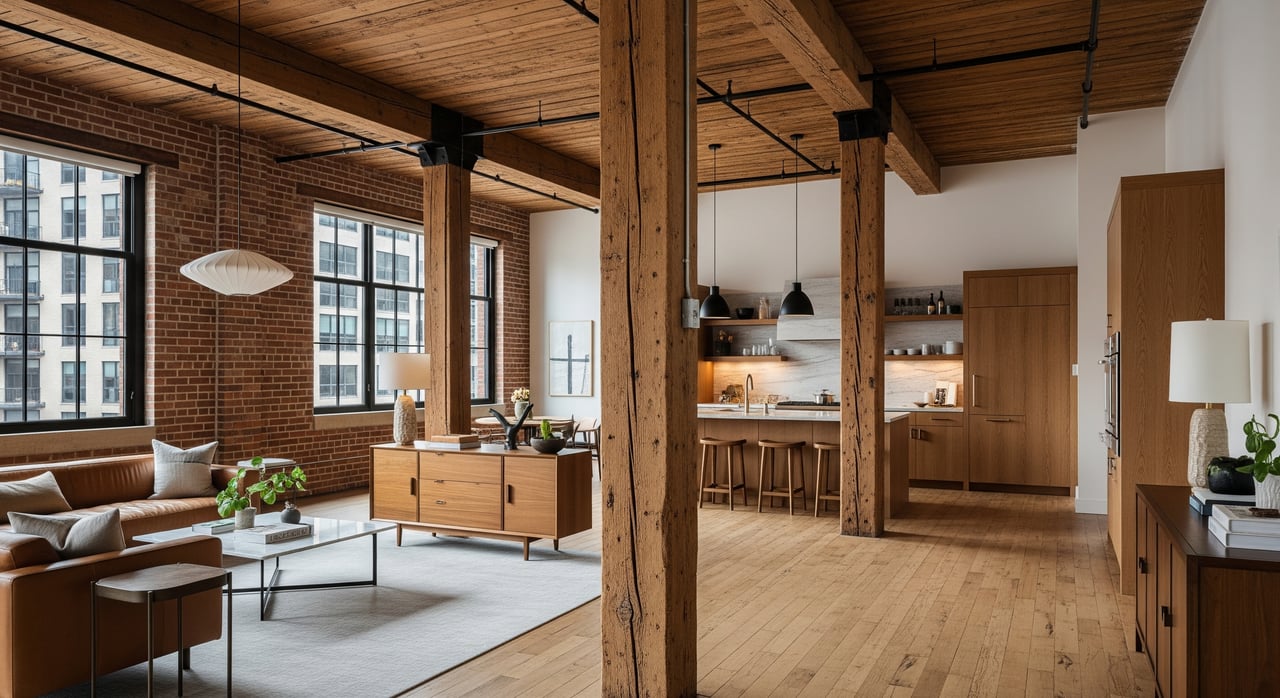
Love the look of exposed brick and towering beams but not sure what counts as a true River North loft? You are not alone. In a neighborhood with a deep industrial past and decades of conversions, it can be hard to separate authentic timber lofts from newer “loft‑style” builds. In this guide, you will learn how to spot the defining features, what they mean for light and sound, and how to do smart due diligence before you buy. Let’s dive in.
What makes a true timber loft
Structure and materials
A true River North timber loft starts with its bones. You are looking for original heavy timber beams and columns that are part of the building’s load path, often with visible joinery, saw marks, and a real patina from age. Authentic interiors also show full‑depth brick masonry on one or more walls, not a thin brick veneer over studs.
Some buildings mix cast‑iron or steel columns with timber. Floors may be original thicker planks rather than thin modern flooring. The giveaway is continuity: original timbers and brick typically run uninterrupted through the building, with age, repairs, and wear that feel consistent across spaces.
Ceiling height and volume
Industrial lofts were built for machines and storage, not drywall ceilings. You can expect a taller‑than‑residential volume, commonly in the 10 to 14 foot range and often higher in some bays. Ask for the clear height from finished floor to the underside of structure, not just to a dropped soffit.
If a unit feels compressed by low ceilings or heavy soffits everywhere, it may be a newer space inside an old shell rather than a preserved loft volume.
Column grid and bays
Warehouse buildings are defined by a regular column grid with wide bay spacing, often around 15 to 30 feet depending on the original use. That grid creates flexible open plans and helps daylight travel deeper into the floor. When you tour, notice how columns frame the space and whether the plan still reads as a series of open bays instead of small chopped rooms.
Factory windows and light
Classic loft windows are tall, multi‑pane factory sash windows in steel or wood, often running in long horizontal bands. Original units were typically single‑glazed; many conversions later upgraded to insulated glazing. The number of exterior exposures and the run of windows in your unit will drive how bright the interior feels more than ceiling height alone.
Look for wide window spans, consistent mullions, and frames that align bay to bay. Small punched openings or undersized modern replacements often signal a loss of authentic character and a hit to natural light.
Plan logic and original systems
True lofts keep the spirit of the original open plan. Bedrooms, kitchens, and storage are often built into the volume instead of fully subdividing it. You may still see evidence of industrial circulation, like former freight cores or loading areas. Visible systems such as exposed ducts, trusses, or sprinkler mains also point to an honest conversion, while full concealment behind drywall and low ceilings can suggest a heavily modernized space.
How these features affect living
Sound and acoustics
Tall ceilings and hard surfaces create longer reverberation times. Expect “live” acoustics and more echo than in a typical drywall condo. Lateral sound transfer between units can be higher if party walls and floors remain historic without added insulation.
Timber can carry low‑frequency vibrations, yet the mass of masonry and wood can help damp mid‑to‑high frequencies. If you are sensitive to noise, plan for mitigation such as soft furnishings and rugs, acoustic panels, resilient channel retrofits, mineral wool in new partitions, upgraded seals on doors and windows, and vibration isolation for mechanicals.
Daylight and views
Large factory windows and wide bays deliver generous daylight when your unit has strong exterior exposure. Orientation and window runs matter most. Deep floorplates or single‑exposure units can still feel dim even with high ceilings. Added mezzanines or new interior walls can block light unless they use glass or open rails.
Before you fall for a dramatic ceiling, study how far daylight reaches into the plan. The column grid, window size, and exposure count often tell the real story.
Costs, reserves, insurance
Older brick‑and‑timber buildings need ongoing care. Expect capital projects like tuckpointing, window restoration or replacement, roof work, structural repairs, waterproofing, elevator modernization, and life‑safety upgrades. Review the association’s reserve study and recent board minutes to understand timing and scope.
Historic fabric may require specialized trades, which can increase routine costs. Insurance for heavy‑timber and masonry buildings can have specific underwriting requirements, including sprinkler systems and fire separations. Authentic character can boost market desirability, but you should budget for potential window, HVAC, and envelope upgrades over your ownership horizon.
Safety and structure
Many of these buildings were designed for heavy industrial loads, but decades of use and modifications matter. Look for documentation of structural work at the time of conversion and later upgrades. Residential conversions must meet Chicago life‑safety codes, including egress routes and fire protection. Verify what was installed and whether later changes maintained compliance.
Buyer due diligence checklist
Documents to request
- Building permit and conversion records showing what work was done and when.
- As‑built or architectural drawings for the unit and common areas.
- Condo declaration, bylaws, plat of survey, and building floor plans that show unit boundaries and structural elements.
- Recent reserve study and 2 to 3 years of board meeting minutes to reveal planned or recent assessments.
- Association insurance policy details and any underwriting requirements.
- Records for window, roof, elevator, or major capital projects, with dates and warranties.
- Any landmark designation, preservation easements, or historic program participation.
- Vendor contracts for masonry, roofing, elevator, pest, and HVAC, plus any emergency repair history.
- Environmental reports or abatement records for asbestos or lead paint, if available.
- Unit‑level receipts for structural, system, or significant interior work.
Inspections to consider
- General home inspection by a pro experienced with older masonry and loft buildings.
- Structural engineer review if you see patched or altered timbers, removed members, or settlement.
- Building envelope and window inspection, especially for original steel sash.
- Mechanical and HVAC assessment focused on noise, zoning, and shared distributions.
- Fire and life‑safety review of sprinklers and egress conditions.
- Pest and wood‑decay inspection for hidden rot or insect damage in timbers.
- Acoustic consultant if you have studio, music, or work‑from‑home sound needs.
- Preservation or tax consultant if historic status or incentives may affect ownership.
On‑site visual checks
- Exposed timbers: look for replacements, heavy patches, or laminated members vs solid originals.
- Brick: check for loose units, recent repointing, efflorescence, or wall bowing.
- Column grid: confirm bay size and how columns affect furniture layout.
- Clear height: measure floor to underside of structure, not to dropped soffits.
- Windows: note material, glazing type, seals, condensation, and signs of leaks.
- Partitions: see whether walls are full height or partial dividers that respect the open plan.
- Moisture: watch for stains, peeling paint, warped timbers, or musty odors.
- HVAC: locate visible ductwork, stacks, and outdoor condensers that may create noise.
- Floors: test for unevenness, sagging, or patches that hint at prior structural work.
- Egress and fire doors: confirm compliance elements are visible and accessible.
- Sound test: visit at different times and listen for neighbor noise and building systems.
Questions for the board and listing agent
- When was the conversion, and what major upgrades have been completed since?
- Are original windows intact or retrofitted with insulated glazing or storms?
- What capital projects are pending, and what is the special assessment history?
- Does the property have landmark status or preservation restrictions?
- Are there limits on modifying exposed structure inside units?
- How is HVAC handled, and who pays for common mechanicals?
- Any sound complaints or litigation in recent minutes?
- How does the declaration allocate costs for structural or historic repairs?
Red flags and negotiation levers
Common red flags
- No permit record for the conversion or for structural alterations.
- Moisture staining, rot, or insect damage to timbers without documented remediation.
- Extensive modern partitioning that erases the original open bay logic.
- Poor window replacements that shrink openings and reduce daylight.
- Low reserves, frequent special assessments, or new assessments for structural or masonry work.
- Evidence of past fire damage without engineer documentation of repairs.
Negotiation levers
- Use inspection and engineering findings to seek price adjustments or seller credits.
- Request escrow or credits for near‑term projects such as windows, roof, or masonry.
- If landmark approvals add time and cost, factor that into your terms.
- For noise concerns, negotiate upgrades like acoustic treatments or improved doors and glazing.
Smart tradeoffs
- Authenticity vs convenience: Original timber and brick deliver character and value, but they can come with acoustic challenges and higher maintenance.
- Loft‑style vs true loft: Newer “loft‑style” units may perform better on insulation, sound, and windows, but they lack the original structure and spatial logic that define a true loft.
- Prioritize what matters most to you, whether that is ceiling height, long runs of factory windows, exposed structure, or historic details, and budget accordingly.
Ready to compare River North lofts?
River North’s best timber lofts pair authentic industrial bones with smart residential upgrades. If you want help separating originals from lookalikes, we will guide you through building records, unit‑level inspections, and value‑driven negotiation so you buy with confidence. Reach out to K + D Homes to start your search.
FAQs
What defines a true River North timber loft?
- Look for original heavy timber beams and columns, full‑depth brick walls, wide column bays, tall factory windows, and an open plan that respects the building’s industrial origins.
How loud are timber lofts compared to condos?
- Expect more echo and potential sound transfer due to tall volumes and hard surfaces; mitigation can include soft furnishings, acoustic panels, upgraded seals, and resilient wall or ceiling assemblies.
Do authentic lofts cost more to maintain?
- Often yes, because older masonry, windows, roofs, and elevators require specialized care; always review the reserve study, minutes, and recent capital projects.
Are original factory windows a dealbreaker?
- Not necessarily; many buildings retrofit or restore them, but you should assess condition, thermal performance, and any plans or costs for replacement or repair.
What inspections should buyers prioritize for timber lofts?
- In addition to a general inspection, consider structural, envelope/window, HVAC, fire and life safety, and pest/wood‑decay reviews, plus acoustics if noise is a concern.