Ask most River North buyers which condos carry the most financing risk right now and they will point at the same building every time: the vintage 1920s tower with the tuckpointing everyone can see from the sidewalk. That instinct is reasonable. It is also, as of this fall, backwards for a specific slice of the neighborhood's inventory.
On August 3, 2026, Fannie Mae and Freddie Mac retired the Limited Review and Streamlined Review pathways that had let roughly 40% of condo mortgage applications skip a deep look at the building's finances, according to Community Associations Institute CEO Dawn Bauman, quoted by CNBC. Every condo project with more than ten units now goes through Full Review, no matter how large the buyer's down payment. That change lands unevenly across River North, and the buildings absorbing the most new scrutiny are not always the ones locals assume.
What Actually Changed on August 3
The old system let a buyer with a strong down payment sidestep most questions about the association itself. Full Review changes that. Underwriters now dig into the budget, the reserve account, insurance coverage, and any pending litigation or special assessments before the loan can be sold to Fannie or Freddie, regardless of how much the buyer is putting down.
Three other pieces of the same policy update matter for anyone closing on a River North condo this fall. The minimum reserve contribution is stepping up from 10% to 15% of the annual budgeted assessment income, effective January 4, 2027, and associations that fall short must now point to a professional reserve study funded at its highest recommended level rather than the old "baseline" approach. Master insurance deductibles are capped at $50,000 per unit as of July 1, 2026, which means owners in buildings that chose a higher deductible to save on premiums may need to carry their own HO-6 policy to bridge the gap. And on the more buyer-friendly side, the rule eliminated the requirement that a building be more than 50% owner-occupied to qualify for conventional financing, which helps investor-heavy buildings that had been locked out.
The Fault Line Isn't Age, It's Height
Here is where River North's building stock gets interesting. The neighborhood carries two structural realities most buyers never connect, and the gap between them is exactly where a smooth close can turn into a stalled one.
Chicago's Facade Ordinance, codified at Municipal Code sections 14A-6-603.2 through 603.5, requires periodic exterior wall inspections for any building 80 feet tall or higher, roughly seven stories and up. Buildings in this category have to file an ongoing inspection report or a critical examination with the Department of Buildings, short forms due November 1 and critical exams due December 1, on a cycle set by construction category. A full-amenity tower like Grand Ohio at 211 West Ohio or Grand Plaza at 540 North State has been filing these reports for years. Whatever the reserve study says about that building's roof, curtain wall, or parapet, there is already a paper trail a lender can request.
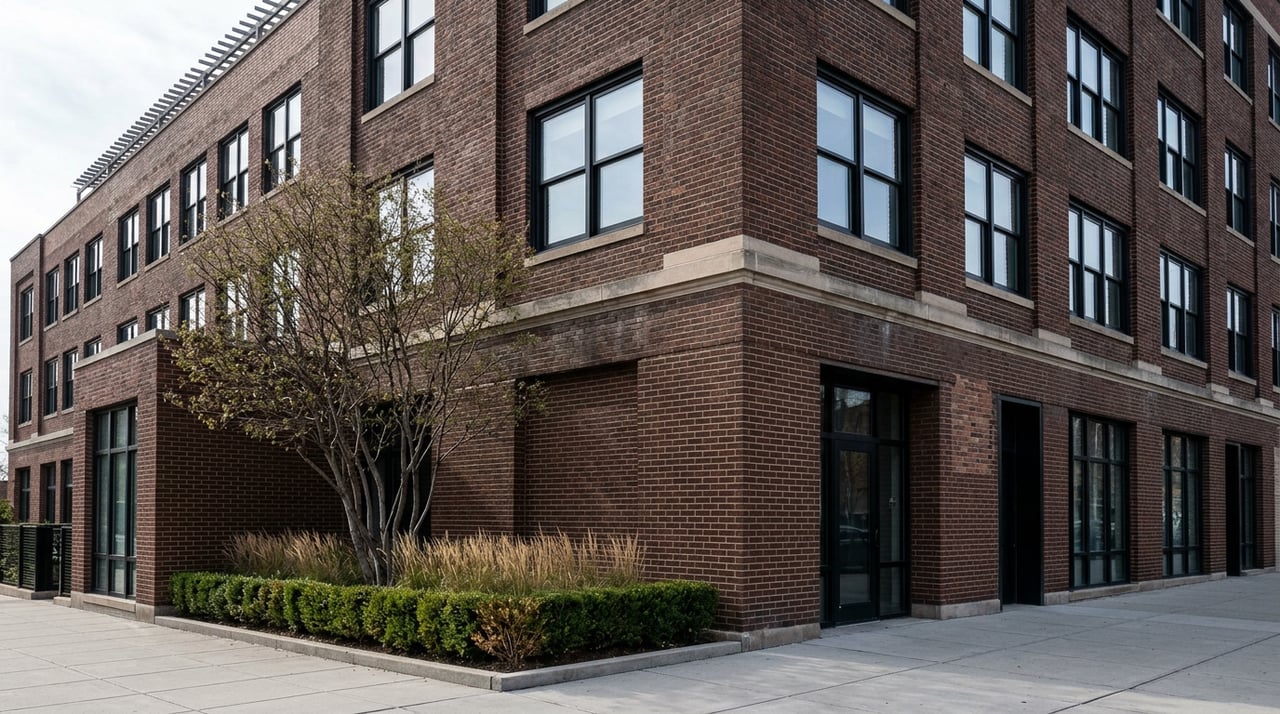
Now compare that to the four, five, and six-story brick warehouse conversions that make up so much of River North's character, the loft buildings on streets like Illinois and Huron that trade at $550 to $700 or more per square foot precisely because they have the exposed timber and factory windows buyers want. Many of these buildings sit under the 80-foot threshold. They have never been legally required to produce a facade inspection report, because the ordinance simply does not reach them.
That would be a minor footnote if these same buildings were also small enough to dodge the new mortgage rules. Most are not. A converted loft building with 15, 30, or 50 units clears the 10-unit waiver threshold easily and lands in Full Review right alongside the high-rises. So the building type most exposed to the new lending scrutiny is not the landmark tower with decades of inspection history. It is the mid-size loft conversion that is large enough to trigger Full Review but short enough to have never been forced into the ordinance's documentation habit.
| Building type in River North | Subject to Facade Ordinance? | Fannie/Freddie review tier | Documentation trail |
|---|---|---|---|
| Full-amenity high-rise (80+ ft), e.g. Grand Ohio, Grand Plaza | Yes, mandatory cycle | Full Review | Years of filed inspection reports |
| Mid-size loft conversion, 11+ units, under 80 ft (common on Illinois, Huron) | No | Full Review | Often no forced reserve study |
| Small conversion or rehab, 10 or fewer units | No | Eligible for waiver | Minimal, but rarely needed |
| Recent office-to-residential conversion (e.g. 223 W Erie) | Depends on height, grace period applies | Full Review once established | First facade report due 2 years after initial occupancy |
The office-to-residential wave adds one more wrinkle worth knowing. River North has several conversions in motion, including the City Council-approved project at 223 West Erie Street and a planned conversion at 226 West Ontario Street, where the developer expects to begin construction this December. These particular projects are aimed at the rental market rather than for-sale condos, but they illustrate the same principle: under the facade ordinance, a newly occupied building gets a two-year grace period before its first report is due. A brand new conversion can look pristine to a buyer while still carrying zero independently verified inspection history, which is its own version of the same blind spot.
What This Means If You're Buying
Ask for the condo questionnaire and the most recent reserve study before you remove your inspection contingency, not after. If the building is under 80 feet and has more than 10 units, do not assume the absence of a facade ordinance filing means the building is fine. It may simply mean nobody has been legally required to check. Ask the board directly whether an independent reserve study has been completed in the last three years and whether the association is funding at the level that study recommends. Illinois law, under Section 22.1 of the Condominium Property Act, requires sellers to disclose known pending assessments, but that disclosure only covers what has already been approved. A board that voted last month to commission a facade study is not required to tell you that yet.
What This Means If You're Selling
If you sit on a board in one of River North's mid-size loft buildings, the smartest move available right now is proactive, not defensive. Commissioning an independent reserve study before you list turns an open question into a closed one for every buyer's lender. Boards that wait until a buyer's underwriter asks for it are adding weeks to a closing timeline that used to take days. With the reserve funding minimum stepping up to 15% in January 2027, associations also have a real incentive to get ahead of their next budget cycle rather than reacting to it.
A Few Straight Answers
Does this affect cash buyers? Not through the lender, since Fannie and Freddie rules only govern financed purchases. Most title and closing attorneys still recommend cash buyers request the same reserve study and board minutes, since a building with real structural or financial problems is a bad investment regardless of how it's paid for.
If my building already filed a facade ordinance report this year, am I in the clear? It helps, but the lender will still want the reserve study and current financials independently. A clean facade report answers the structural question, not the funding question.
Does removing the 50% owner-occupancy cap change anything for River North specifically? It should help buildings with higher rental concentrations, which are more common in some of the neighborhood's newer towers, qualify for conventional financing that would have been closed off before.
River North's condo market has always rewarded buyers who look past the finish and ask about the building itself. This fall, that habit matters more than usual, and it points at a different set of buildings than most people expect.
If you're buying or selling a River North condo and want a clear read on how a specific building's financing profile looks before you write an offer or list, KD Homes can walk through it with you. Request a Free Home Valuation to start the conversation.