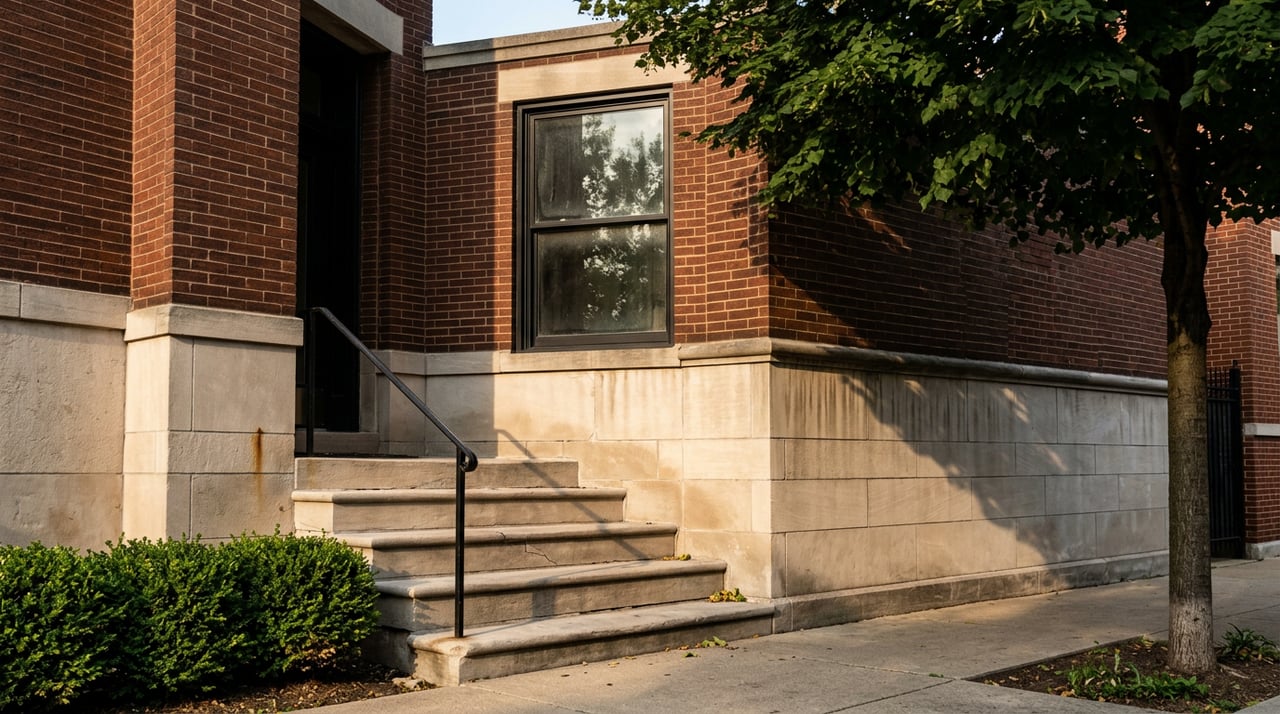
The house at 1652 N. Humboldt Blvd. has stood since 1891, coach house and all, through more than a century of ownership changes on a stretch of boulevard that most of Logan Square treats as background scenery. On February 18, 2026, that changed. Chicago's City Council voted to extend the Logan Square Boulevards Landmark District along Humboldt Boulevard and onto the east side of Sacramento Boulevard, folding roughly 95 more buildings into a preservation designation that neighbors had been pushing for since 2004.
If you own one of those homes, or you're weighing whether to buy one, the instinct is to brace for red tape. That instinct is mostly wrong, and the way it's wrong tells you something useful about how these deals actually get complicated.
What the City Council Actually Approved
The ordinance extends the district from Humboldt Boulevard and Cortland Street down to Sacramento Avenue and Walton Street, with Humboldt Park splitting the middle so the city treats Sacramento as its own segment of the same designation. An initial survey found about 65 buildings along Humboldt Boulevard between Cortland and North Avenue, and roughly 30 more on the east side of Sacramento, most of them residential and built between the 1880s and 1929 in a mix of styles typical of that era's boulevard architecture.
The push had stalled under six different council members over two decades before Ald. Jessie Fuentes (26th) picked it up in 2024. Getting there required a formal city survey and consent from homeowners along the boulevard, a process that took more than a year and a half. Among the newly protected properties is the former home of Jens Jensen, the landscape architect behind Chicago's boulevard system, at 1141 N. Sacramento Blvd. Other homes in the extension were designed by architects Carl M. Almquist, George Dubin, and Fritz Lang.
Andy Schneider, president of Logan Square Preservation, put the two-decade timeline in perspective when the vote passed.
"We are grateful to Ald. Fuentes for her leadership on this."
The original Logan Square Boulevards District dates back further than most people assume. It was added to the National Register of Historic Places in 1985 and designated a Chicago Landmark in 2005. This year's extension doesn't create a new district. It widens an existing one that's been part of the neighborhood's legal fabric for two decades.
The Myth: Landmark Status Means Years of Red Tape
Here's where seller anxiety usually goes wrong. The common assumption is that landmark status means a slow-moving review board second-guessing every project, adding months to a timeline and scaring off buyers who don't want the hassle.
The Commission on Chicago Landmarks' own published process doesn't back that up. Routine maintenance, including painting and minor repairs, doesn't require landmark review at all. For work that does need a look, most permit applications for landmark properties are approved within a single day, according to the Commission's process as described by the 26th Ward's own summary of how the designation works. The review applies to significant historical and architectural features, which for most district properties means the exterior elevations visible from the public right of way, not the whole building and not the interior.
Studies on landmark designation and property value cited by preservation advocates generally find the opposite of what sellers fear: designation doesn't drag down resale value, and it's often treated as a selling point rather than something to downplay in a listing.
None of that means landmark status is invisible in a transaction. It means the friction isn't where most people look for it.
The Actual Friction: Two Reviews, Two Clocks
The real complication is sequencing, not slowness. Landmark review and zoning review run on separate tracks. A property can have a completely clean zoning path for an addition, a garage, a rear expansion, and still hit a design review requirement for anything visible from the street that the zoning approval never flagged.
That's the detail that catches buyers mid-plan. Someone budgets a project against the zoning code, gets comfortable with the scope, and only later discovers that the front stoop, the cornice, or a new window on the street-facing elevation needs a separate sign-off from the Commission before the permit clears. It's rarely a dealbreaker. It's a scheduling problem that shows up late if nobody checked for landmark status at the start of due diligence instead of after an offer is already in.
For anyone budgeting a renovation on a boulevard greystone in this district, the more useful numbers aren't about the review board at all. They're about what the work itself costs, landmark or not:
| Scope | Typical range |
|---|---|
| Full gut rehab | $100–$300 per square foot |
| Whole-building renovation project | $200,000–$500,000+ |
| Full MEP replacement (pre-1940 homes) | $75,000–$95,000 |
| Timeline, whole-home project | 16–32 weeks |
Those figures reflect general Chicago renovation pricing for vintage masonry buildings, not a landmark-specific surcharge. The lesson for a seller pricing a listing or a buyer sizing up an offer is that the design review adds a step to the timeline, not a meaningfully different cost structure.
Why One Median Price Doesn't Capture These Blocks
Ask three sources for Logan Square's median home price right now and you'll get three different answers, and the gap says more about the neighborhood's housing stock than any single number does.
Over the three months ending May 2026, one widely used tracker put Logan Square's median sale price at $730,000, up 12.3 percent year over year, with homes averaging 36 days on market. A separate market snapshot from earlier this year pegged the median closer to $557,500, essentially flat year over year. A third source put the trailing twelve month median around $620,000 to $621,500.
The spread isn't a data error. It's what happens when a single "median" gets asked to describe a neighborhood that includes new-construction single-family builds, converted two-flats, vintage condos, and untouched greystones on the same set of blocks. One breakdown put condos at roughly $425,000 and single-family homes at roughly $823,250, a gap wide enough on its own to explain most of the disagreement between trackers.
That matters directly for anyone evaluating a boulevard property in the newly extended district. A greystone on Humboldt or Sacramento Boulevard isn't competing against the neighborhood's median. It's competing against other pre-1929 masonry homes with similar renovation math, similar review requirements, and similar buyers who are specifically looking for that combination of character and street presence. Pricing it against a citywide or neighborhood-wide median misses the product it actually is.
A Few Straight Answers
Does landmark status restrict what I can do inside the house? For most properties in the district, review covers exterior elevations visible from the street, not interior work. Kitchen and bath renovations, mechanical upgrades, and layout changes generally follow Chicago's standard permit process.
Do I need a permit to repaint or make minor repairs? Routine maintenance, including painting, generally doesn't trigger a separate landmark review.
Will landmark status show up when I list the house? It's tied to the address as a matter of public record, and it's commonly used as a selling point in listings within Chicago's other designated districts rather than something sellers avoid mentioning.
The Logan Square Boulevards District just got bigger for the first time in two decades, and the buildings it now protects, from a landscape architect's former home to a coach house on Humboldt that's outlasted six failed attempts at this exact designation, are part of what makes these blocks worth the extra planning step. If you're weighing a purchase, a sale, or a renovation on a boulevard property in the newly extended district, the team at KD Homes can walk through what the design review actually means for your specific address before you're deep into a project plan.