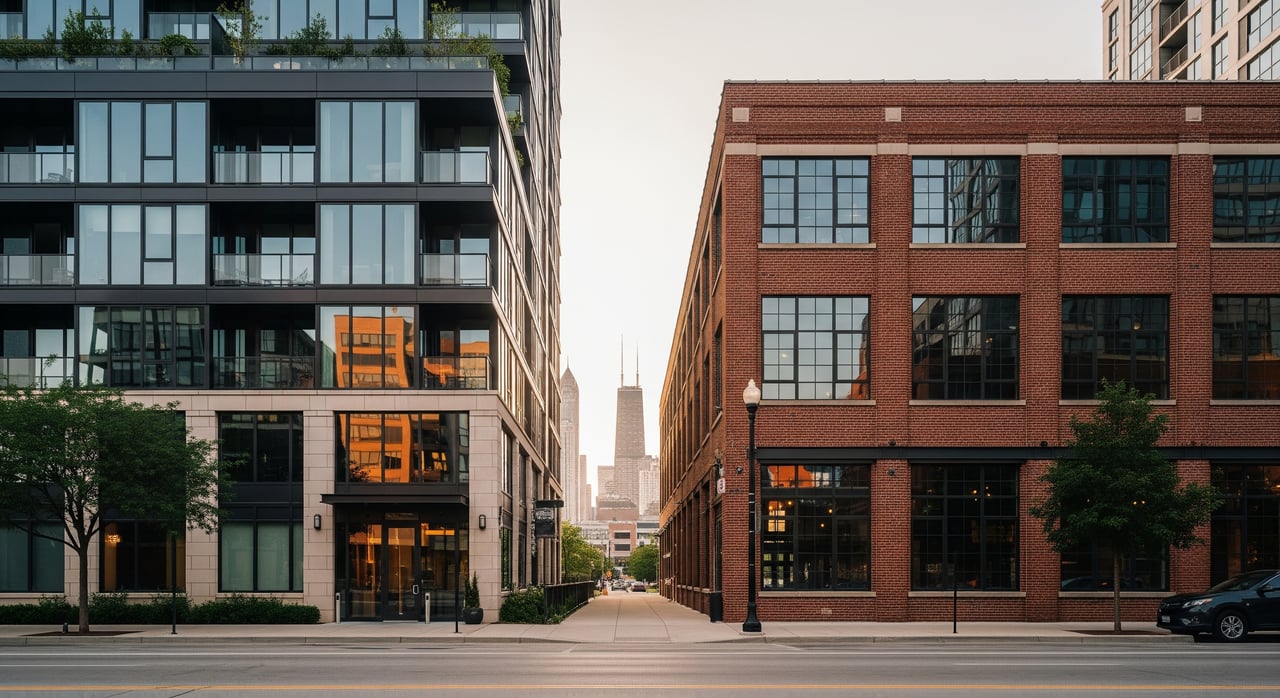
Torn between a sleek new-build condo and a brick-and-timber loft in the West Loop? It is a common crossroads here, where you can choose between character and convenience on the same block. You want a home that fits your lifestyle, holds value, and comes with no surprises. This guide compares the two paths in practical terms so you can buy with confidence. Let’s dive in.
West Loop at a glance
West Loop draws steady demand for its dining, retail, and proximity to major employers and transit. You will find true warehouse loft conversions alongside a steady wave of modern condo developments. That mix creates a clear choice between open character and turnkey convenience.
True loft inventory is finite, which supports niche demand. New buildings often command premiums for their systems, sound performance, and amenity suites. Your decision should weigh total cost of ownership and building health more than list price alone.
Layout and space: efficiency vs openness
Loft conversions
Lofts often deliver soaring ceilings, exposed beams, and wide-open floor plates. The tradeoff is fewer defined rooms and less built-in storage. If you entertain or value creativity in your layout, a loft can feel expansive. If you need multiple enclosed bedrooms or a quiet office, some plans may feel less efficient.
What to check:
- Verify measured livable square footage versus gross area.
- Assess closet and storage options, plus where you could add more.
- Confirm whether you can enclose rooms without structural work.
New builds
Newer condos usually offer efficient layouts with defined bedrooms, en-suite baths, and in-unit laundry. Ceiling heights may be lower than a warehouse conversion, but usable space per square foot often feels higher. Built-ins and modern kitchens help daily living feel seamless.
What to check:
- Review the floor plan for furniture placement and storage counts.
- Note where mechanicals sit and whether they reduce usable space.
- Confirm bedroom sizes and door placements for privacy.
Sound and privacy: what to expect
Loft conversions
Older assemblies can vary widely in sound performance. Open plans amplify noise inside the unit. Unless upgrades were done, wood joists and older partitions may transmit more impact or airborne noise.
New builds
Modern buildings typically use concrete floor slabs, insulated party walls, and better window sealing. You often get improved separation from neighbors and reduced street noise. Mechanical systems are also planned to limit vibration and hum.
How to test sound on a showing
- Ask about floor/ceiling construction and any documented acoustic ratings.
- Visit during rush hour and evening to gauge street and neighbor noise.
- Stand near windows, shared walls, and mechanical rooms to listen for hum or impact sounds.
HOAs, reserves, and assessments
New builds
Monthly HOA dues are often higher because of amenity programming, staffing, and professional management. Many buildings have reserve studies, but early reserves can be light, with increases after developer turnover. Review transition documents to understand any planned adjustments.
Loft conversions
Some conversions keep dues lower by limiting amenities and staffing. The tradeoff can be higher variability in reserves and capital needs. Roof, façade, or mechanical projects can lead to special assessments, so documentation is critical.
What to request from the association
- Current operating budget and the latest reserve study
- Minutes from the last 12–24 months of board meetings
- History of special assessments and planned capital projects
- Current delinquency rate, master insurance details, and management agreement
Red flags to note:
- No written reserve study or unclear reserves
- Frequent or large special assessments
- Delinquency above roughly 10 percent
- Pending litigation that could impact finances
Parking and storage in West Loop
Loft conversions
Many conversions offer limited on-site parking. Owners often rent spaces nearby if deeded parking is unavailable. Storage rooms can vary, though larger footprints sometimes offset that with in-unit space.
New builds
You are more likely to find deeded garage parking, bike rooms, and storage cages. Deeded spaces can add convenience and resale value. Some buildings sell parking as separate parcels with their own taxes and assessments.
Smart questions to ask:
- Is parking deeded, assigned, or rented off-site?
- Are there separate taxes or assessments for the parking parcel?
- What are bicycle storage and package room options?
Amenities: lifestyle and carrying costs
Loft conversions
You typically get modest amenities like a shared roof deck or common room. That keeps monthly dues lower but reduces on-site convenience. For some buyers, the neighborhood serves as the amenity.
New builds
Expect fitness centers, staffed lobbies, package rooms, rooftops, pet areas, and flexible workspaces. Convenience is high, but so are staffing and maintenance costs. Balance lifestyle gains against monthly carrying costs.
Resale implications
Strong amenity suites can widen your buyer pool and support pricing. If you favor lower monthly expenses, a simpler building can be a better fit. Your choice should reflect how you live and what future buyers in this area value.
Resale outlook and buyer pools
Lofts appeal to buyers who want character and volume, especially in well-done conversions with smart floor plans and parking. These homes can be niche, and results depend on uniqueness and condition. New builds often reach a broader audience with turnkey systems, amenities, and deeded parking.
For both types, price is shaped by floor level and light, parking, storage, association health, and proximity to transit and employers. A clean financial picture and an efficient layout help when you decide to sell.
Decision framework: match your priorities
- If you prioritize character, volume, and exposed materials:
- Lean loft. Ensure the conversion was properly permitted, test acoustics, and confirm you can create rooms if needed. Have a clear parking plan.
- If you prioritize turnkey systems, sound control, amenities, and parking:
- Lean new build. Confirm a reasonable HOA for the area, adequate reserves, and a solid post-turnover management history.
- Budget calculus:
- Model total carrying cost: mortgage, property tax, HOA, parking, insurance, and utilities. Consider a maintenance contingency. For older conversions, plan for potential special assessments.
- Resale focus:
- For broad appeal, target efficient layouts and deeded parking in financially sound buildings. For distinctive value, a well-executed loft with parking can shine.
- Quality inspection standard:
- Lofts: engage qualified inspectors and, when appropriate, an engineer to review structure, envelope, and systems.
- New builds: complete a thorough punch list and review warranty, life-safety documentation, and building rules.
Chicago-specific due diligence checklist
Association and financials:
- Declarations, bylaws, and rules
- Current budget, reserve study, and last 12–24 months of minutes
- Capital plan, assessment history, delinquency rate, and master insurance
Title, permits, and legal:
- Certificate of Occupancy and full permitting history
- Open permit search and evidence of code compliance
- Disclosure of any pending litigation
Unit and building systems:
- HVAC, plumbing, and electrical ages and service records
- Window type and replacement history; roof age and plan
- Elevator maintenance logs; façade or masonry reports for conversions
Practical features:
- Parking type and location; related taxes or fees
- Dedicated storage details; amenity access rules and staffing hours
On-site checks:
- Noise testing at different times of day
- Water pressure and drainage checks; look for moisture or cracks
- Elevator wait times in mid- and high-rise buildings
Financial modeling:
- Total monthly cost including HO-6 condo insurance and utilities
- Add a contingency line for potential assessments in older buildings
Costs beyond price
Property taxes in Cook County are based on assessed values that can adjust after a sale. City and county transfer taxes add to closing costs. Your master insurance coverage type will affect your HO-6 policy needs. Build these items into your monthly and cash-to-close estimates.
When a loft may be the better buy
Choose a loft if you want volume, authenticity, and flexible space you can shape over time. The right conversion combines character with solid building documentation and manageable noise. Add value with smart room enclosures and storage without losing the loft feel.
When a new build may be the better buy
Choose a new build if you want a move-in-ready home with modern systems and strong acoustic control. Amenity suites and deeded parking add convenience and appeal. A healthy reserve plan and transparent management can make ownership feel easier.
Ready to compare options side by side? Reach out to K + D Homes for a tailored plan, from shortlisting buildings to reviewing reserves, parking, and resale. We will help you weigh the tradeoffs and secure the right fit in the West Loop.
FAQs
Which holds value better in West Loop?
- It depends on layout efficiency, parking, association health, and current demand; lofts can command premiums for rarity and character, while new builds often have broader marketability.
Are lofts noisier than new condos?
- Often yes due to open plans and older assemblies, though well-renovated lofts with upgraded insulation or concrete floors can perform comparably to newer buildings.
How important is deeded parking in West Loop?
- Deeded parking materially widens your buyer pool and supports pricing, while also providing daily convenience if you commute or own a car.
Should I worry about special assessments in older conversions?
- Yes, request reserve studies, board minutes, and capital plans; deferred exterior or mechanical work is a common cause of special assessments.
Do new condos always cost more to own monthly?
- Not always, but amenities and staffing typically raise HOA dues; newer systems can reduce near-term maintenance and help offset some costs.